Timber Decking That Lasts: Boards, Substructure, Fixings and Detailing
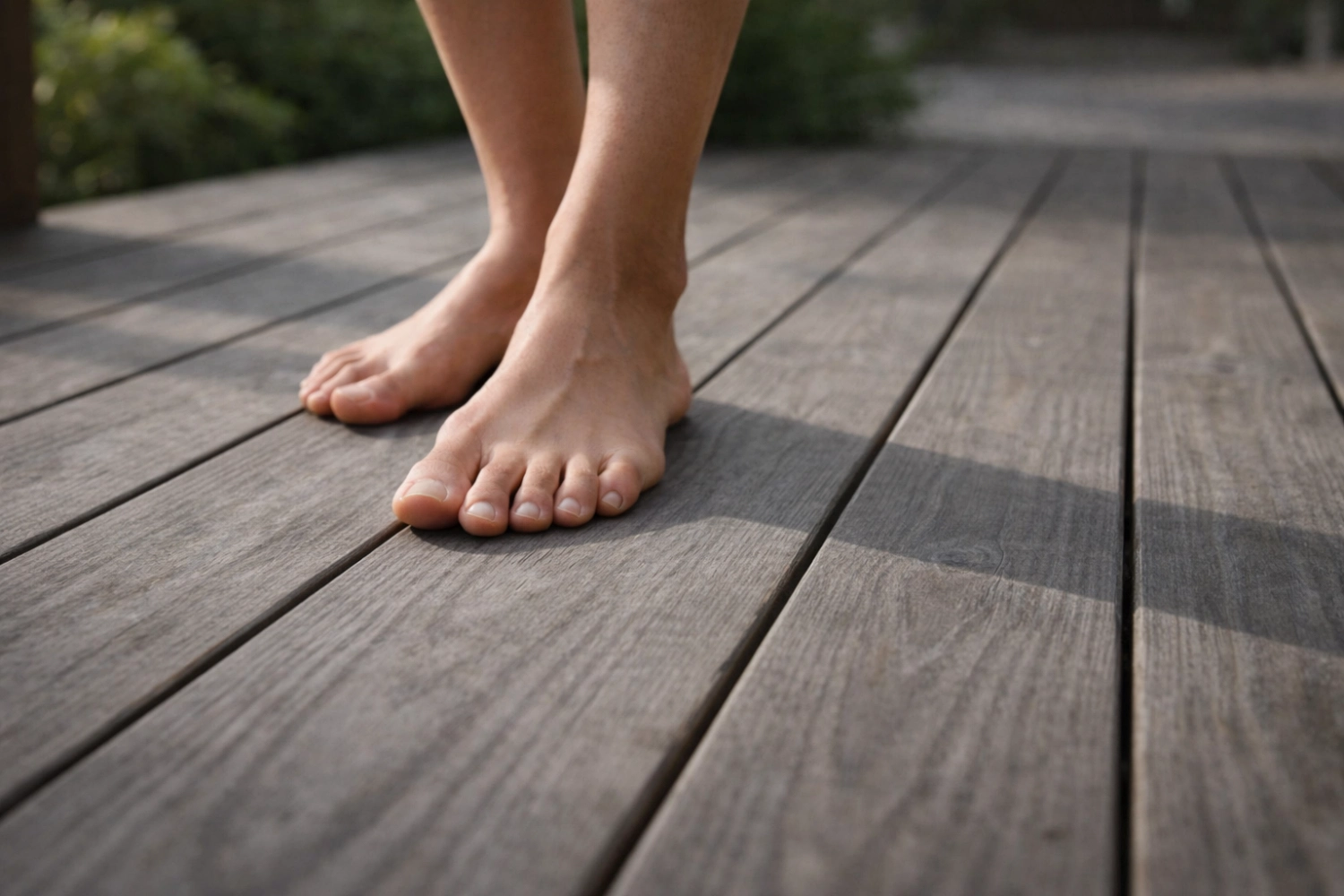
A lasting deck depends on more than the visible boards. In Irish conditions, frequent rain and slow drying put pressure on every part of the construction, from the material and substructure to the smallest fixing detail.
Avara® timber decking brings those choices together as a system. Built on thermally modified timber, Avara® is machined, textured and finished in-house in Ireland through to the final coating, so the finished board is controlled from raw timber through to the surface.
What Determines How Long a Deck Lasts
A deck is a system of boards, substructure, fixings, ventilation, drainage, finish and detailing. Each part must suit the others. Durable boards cannot compensate for joists that remain wet, and a good coating cannot correct a water trap at a board end.
The key design principle is to let the deck shed water and dry between periods of exposure. This applies to the visible surface and the concealed structure beneath it.
Board Selection: Material and Movement
Board material has a direct effect on spacing, joint appearance and long-term stability. Avara® is based on thermally modified timber, where the modification changes the timber through its section. The result is more dimensionally stable than untreated softwood, helping boards retain a more consistent appearance as moisture conditions change.
Pressure-treated timber is a valid trade option, but preservative treatment generally penetrates only part of the section. It leaves an untreated core within the treated outer envelope. When boards are cut, notched or drilled, that core can be exposed. Cut ends need prompt treatment with a compatible end-grain preservative; otherwise they become a point where moisture can enter and decay may begin. Over-driven fixings can also break the treated envelope.
Unmodified softwood has no decay protection and moves significantly with moisture. It is not suitable for exposed exterior decking. Its use belongs in sheltered, temporary or well-protected work.
Movement affects practical details. It influences board spacing and open joints, and can contribute to cupping or a less consistent finish. Avara®'s improved stability helps support a more controlled layout, but every timber deck still needs movement allowance and drainage.
Confirm board dimensions, thickness and joist spacing with the supplier against the selected profile and project-specific guidance. Do not rely on generic span figures. Corell's decking range includes Avara® Clear and Avara® Character, which differ in grain and knot character.
Substructure, Ventilation and Drainage
Decking must be able to dry. Provide a ventilated construction beneath the boards, with clear airflow at the edges. Avoid enclosing a deck in a way that traps damp air or prevents inspection of the substructure.
Set the structure clear of soil and standing water. Grade the surrounding ground so water drains away, and prevent ponding beneath the deck. Where a deck meets a building, detail the junction to manage water and retain appropriate clearance from the wall and any vulnerable openings.
Joists and supports need suitable protection for their exposure. Detail the board-to-joist junction so water does not remain trapped against either surface. Keep drainage paths clear after planting, landscaping and other finishing work. Further information on planning timber for outdoor spaces and on timber cladding detailing can help inform the broader design approach.
Fixings and Detailing
Fixings and exposed ends are frequent points of early deck failure. Specify corrosion-resistant fixings suitable for exterior use and for the site exposure. Stainless steel is a dependable choice for exterior applications; seek project-specific advice for coastal or otherwise aggressive environments.
Drive screws to the correct depth, not beyond the board surface. Over-driving can damage the timber around the fixing, create a small water trap and weaken the fixing's hold. Pilot holes may be required, particularly near board ends or where the timber and screw guidance call for them. Follow the fixing supplier's recommendations.
Support board ends properly and allow movement at joints and the perimeter. Protect exposed end grain at every site cut with a compatible product recommended for the timber and coating system. Hidden fixing systems can create an uninterrupted surface, but they demand accurate machining, compatible boards and careful installation.
The same disciplined approach applies to fixings and detailing of timber cladding, although decking has its own structural and water-management requirements. Follow the installation guidance relevant to the selected product and project.
Ground Contact and the Base Detail
Permanent damp is a principal risk for timber. Any support close to soil, planting or standing water needs especially careful design. Keep timber separated from soil and provide a base that drains rather than holds water against the structure.
Pressure-treated timber can be used in suitable applications, but it is not a permanent solution in ground contact. Above ground, its performance depends on site discipline: ends protected, fixings correctly driven, boards clear of standing water, and airflow maintained. Avara® should also be installed clear of ground contact and detailed to drain and dry.
Avara® is supported by a 15-year limited warranty against fungal decay when correctly detailed, installed and maintained. Confirm the applicable warranty terms for the selected Avara® decking product and project.
Board Profiles And Surfaces
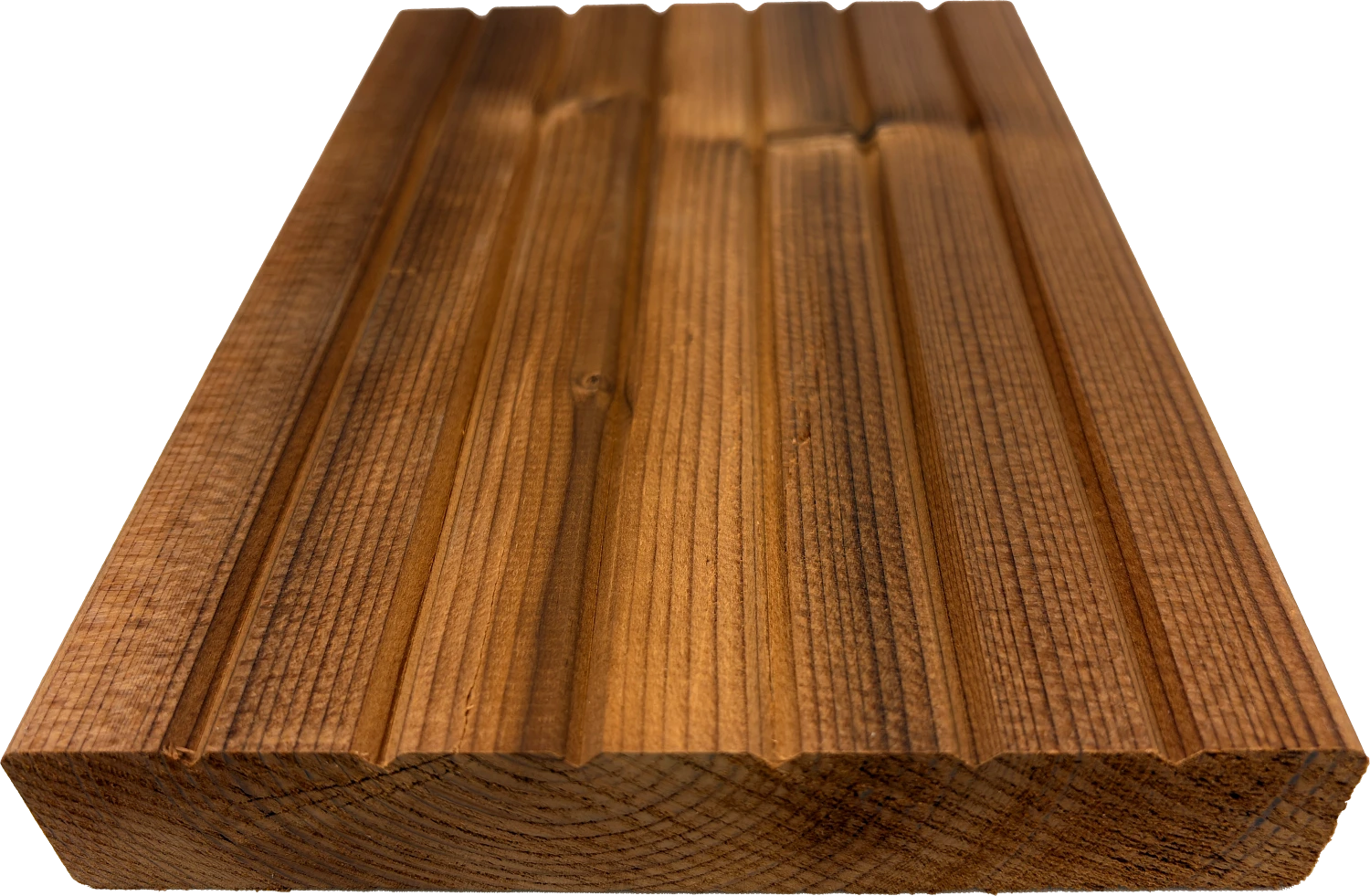
Decking boards are selected primarily on profile and on how the surface behaves outdoors. A smooth planed face gives a clean, even surface and suits sheltered areas and covered terraces. A grooved or ribbed face is the more common choice for exposed decking, and the reason is water. The machined channels let water run away along the board rather than sitting on the face, so the surface clears and dries more quickly after rain. That is a drainage benefit rather than a claim about grip. A brushed face sits between the two, giving a lightly textured surface that still drains freely.
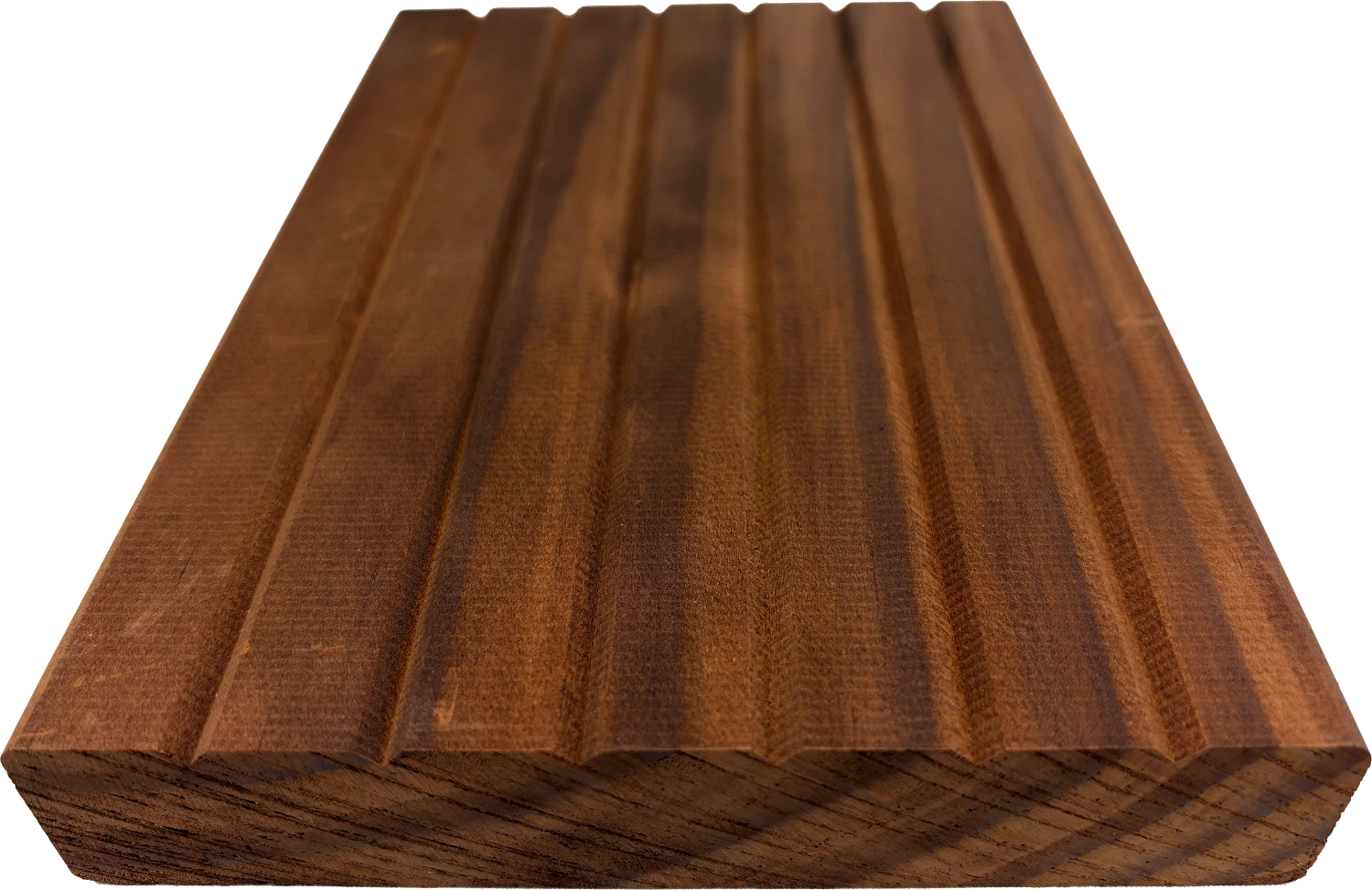
Colour and coating then determine how the deck reads against the building. A coating with the appropriate pigmentation and UV protection will hold a more controlled colour, while an uncoated board will weather towards a natural silver-grey. Either is a valid design decision as long as it is made at specification stage.
Be careful about the more heavily worked surfaces. The textures used on exterior cladding, including Rift and Yakisugi, are developed for walls and are not established walking surfaces. Confirm with us before specifying either for a deck, and treat a smooth, grooved or brushed profile as the default for decking.
A properly applied coating does not peel, blister or flake. Sanding is not required as part of routine maintenance. Follow the specified coating system for inspection, cleaning and any local repair.
Maintenance for Long-Term Performance
Keep the deck clear of leaves, soil and debris, especially at board joints and around the perimeter. Clear drainage routes and maintain airflow beneath the structure.
Inspect the boards, fixings and substructure periodically. Look for loose screws, damaged end grain, standing water and areas where debris is retaining moisture. Clean with a method suitable for the coating and timber. Recoat according to the specified coating system and exposure conditions, rather than waiting for extensive deterioration.
Avara® is a natural material. Its surface and colour will respond to weather and light over time. With routine inspection, clear drainage and timely local repairs, maintenance can remain measured and manageable.
Timber Decking Specification Checklist
- Specify the Avara® system for visible exterior decking. Where an alternative timber route is being considered, treat unmodified softwood as unsuitable for unprotected exterior use and pressure-treated timber as carrying real limits in and near the ground.
- Confirm board dimensions, thickness, profile and joist spacing with the supplier for project-specific guidance.
- Design for ventilation beneath the deck and open airflow at the edges.
- Keep boards, joists and supports clear of soil and standing water.
- Provide drainage away from the deck and from adjacent buildings.
- Specify compatible exterior fixings and install them without over-driving.
- Support board ends and allow for movement at joints and perimeters.
- Protect exposed cut ends with a compatible product.
- Confirm the selected board profile, colour and coating are suitable for a walking surface and the intended use.
- Check warranty terms, installation guidance and maintenance requirements before construction.
Across the whole build-up, the Avara® system is the specification that gives the least away to site conditions. The modification runs through the full section, the boards are machined and finished in-house in Ireland, and the finished surface does not depend on a treatment layer surviving every cut and fixing.
For project-specific advice on Avara® timber decking, view the decking range, compare Avara® Clear and Character, or contact Corell.

© 2026 Corell Architectural Timber Ltd.
All rights reserved.